If you've had Parkinson's for sometime, or perhaps were just diagnosed, you've probably had someone tell you about the benefits of cannabis. It's certainly in the news a lot! While the CBD (Cannabidiol) form of the hemp plant has shown benefit, THC (Tetrahydrocannabinol; from the marijuana plant) may have some drawbacks. CBD is not a hallucenogen, where as THC can be. Talk to your doctor to know whether you are a good candidate for either CBD or THC.
Medical marijuana may be helpful for pain, insomnia, anxiety, nausea, appetite, restless legs syndrome, muscle ramps or spasms, REM behavior disorder and agitation. There is no great evidence showing that it helps with most Parkinson's motor symptoms, although some patients report it helping smooth out "on/off" periods or dyskinesias. That may be primarily because it is a relaxant. Jamey's neurologists has recommended he take it only for sleep (he does have REM behavior disorder). While it would probably not be beneficial for Jamey's other symptoms at this point, he's currently taking a hallucinogenic sleep aid, so this should prove to be a better alternative.
The question that is often asked, particularly from older folks like us, is, "Will there be any side effects?" The answer is, yes, possibly. Side effects may include dizziness, low blood pressure, imbalance, falls, apathy, abdominal pain (rare), memory loss, dry mouth and confusion. Actually not much different than any medication you might already be taking. However, THC may be more likely to cause side effects such as paranoia, anxiety, and confusion. Since low blood pressure is often a side effect of your regular Parkinson's medication, you should definitely consult your physician before using cannabis, as it could cause your blood pressure to plummet to a dangerous level.
The mode of ingestion used will depend on the symptoms you want to address. For focal pain or muscle soreness, it's recommended you start with creams or patches. For other symptoms, oral formulations like drops, powders, or candies work well. There is also a pill form available if you don't need the benefits to be fast-acting. It is not recommended to ingest through smoking; while this can produce a more rapid onset of effects, it can also be associated with breathing issues. A vaporizer MAY reduce the risk for pulmonary problems.
If this is new to you (as it is to us), it might be good to start with pure CBD which will have less potential side effects. You can add THC if you feel it will help. Many patients report better benefits from products containing both CBD and THC, so you may want to gradually add THC if you deem it necessary. Jamey's neurologist recommended 80/20 CBD/THC in the long run, but we will start with pure CBD for now.
There is no need for a prescription, but you should know that medical marijuana is not strictly regulated. Be sure you buy from a reputable source and start with small doses. because there is no regulation, 10 mg may not always be actually 10 mg. It can be inconsistent and inaccurate. I would suggest you buy from the same manufacturer each time as well. That way there is less chance of an issue.
The dosage you use will depend on you, however, most recommend you start with a very low dose (half of what the dispensary recommends) and going up slowly in weekly increments. Many doctors will not recommend dosages. So, use your own discretion--start with less--you can always add more!
You can get medical marijuana at both medical and recreational dispensaries, as well as certain health food stores. I prefer the health food store near us because they have an expert on staff and I know I will always be able to get the same product.
If you have more questions or want more complete answers, go to www.weedmaps.com. Or go to https://medium.com click on More and then choose "Cannabis' from the Life section.They tell what the difference is between hemp, marijuana and cannabis plants.
Thursday, January 24, 2019
Wednesday, December 26, 2018
Party-on Parky!
Forgive the delay in posting the last few months! I cannot believe Christmas is over and we are already heading into the new year. The older we get the faster time flies it seems!
We had three days in a row of parties and that took its toll on us both. We sure aren't the party-ers we used to be. Well, actually, we have never really been party animals, but still. You would think we could handle a few days of "Christmas" without wanting to sleep for the next two weeks. :)
Some things we've learned about Parkinson's and parties:
1. People, even family, can be tiring, but don't reject going just because of that. You can sleep when you die. ๐
2. Children running back and forth in front of you, can shut down the PD brain. It might take several seconds or even minutes to re-boot. But always try again.
3. Power chairs don't like rain. Keep a plastic bag handy (in purse or car) and slip it over the joy stick control. Make sure it is large enough to accommodate the hand of the user as well as the chair arm and controller.
4. When travelling to different homes, take along portable ramps in case there are steps up to the front door. If steps are too steep for a ramp, make sure you also have canes, walkers, or other helps that can get you up the the house. Bring all the helps you might use at different times of the night. Depending on the meds and the circumstance, you may need all of them.
5. Call ahead to restaurants if that's where the party is. Make sure there is adequate parking, a place for power chair or walker, and that reservations can be made ahead. We try to make a trial run to the place if it is a new venue for us. That way we are not surprised by anything the night of the shin-dig.
6. More people equals more stress. PD symptoms get worse when you're stressed. Slow down, be patient and do your best to join in.
7. Always have a disposable urinal in the car (for females, add an adapter). I keep one for Jamey, in a fabric pouch, and slip it into a tote bag or large purse so it is handy. You never know what kind of facilities you might have. Sometimes even getting into the bathroom is tricky.
8. People are usually very understanding (at least with family, hopefully). But most people will never be able to fully understand what you're going through. So, explain as best you can, but don't get upset if they don't "get it". It doesn't have anything to do with how they feel about you.
9. Try and participate as best you can. If your loved one can interpret for you, or include you when it gets hard to chime in, let them take the lead.
10. Speak loudly and project. Don't be embarrassed to ask for help.
11. Don't stop doing things because they're difficult. It's easy to become a hermit, but not at all beneficial.
If everything were easy, it wouldn't
be as rewarding!
We had three days in a row of parties and that took its toll on us both. We sure aren't the party-ers we used to be. Well, actually, we have never really been party animals, but still. You would think we could handle a few days of "Christmas" without wanting to sleep for the next two weeks. :)
Some things we've learned about Parkinson's and parties:
1. People, even family, can be tiring, but don't reject going just because of that. You can sleep when you die. ๐
2. Children running back and forth in front of you, can shut down the PD brain. It might take several seconds or even minutes to re-boot. But always try again.
3. Power chairs don't like rain. Keep a plastic bag handy (in purse or car) and slip it over the joy stick control. Make sure it is large enough to accommodate the hand of the user as well as the chair arm and controller.
4. When travelling to different homes, take along portable ramps in case there are steps up to the front door. If steps are too steep for a ramp, make sure you also have canes, walkers, or other helps that can get you up the the house. Bring all the helps you might use at different times of the night. Depending on the meds and the circumstance, you may need all of them.
5. Call ahead to restaurants if that's where the party is. Make sure there is adequate parking, a place for power chair or walker, and that reservations can be made ahead. We try to make a trial run to the place if it is a new venue for us. That way we are not surprised by anything the night of the shin-dig.
6. More people equals more stress. PD symptoms get worse when you're stressed. Slow down, be patient and do your best to join in.
7. Always have a disposable urinal in the car (for females, add an adapter). I keep one for Jamey, in a fabric pouch, and slip it into a tote bag or large purse so it is handy. You never know what kind of facilities you might have. Sometimes even getting into the bathroom is tricky.
8. People are usually very understanding (at least with family, hopefully). But most people will never be able to fully understand what you're going through. So, explain as best you can, but don't get upset if they don't "get it". It doesn't have anything to do with how they feel about you.
9. Try and participate as best you can. If your loved one can interpret for you, or include you when it gets hard to chime in, let them take the lead.
10. Speak loudly and project. Don't be embarrassed to ask for help.
11. Don't stop doing things because they're difficult. It's easy to become a hermit, but not at all beneficial.
If everything were easy, it wouldn't
be as rewarding!
Tuesday, October 30, 2018
Happy Halloween or "Cut me Mick"
![]() |
| Rocky Balboa in all his glory! |
Rocky was his costume of choice, which made sense, since it was boxing day! No, that shiner isn't real, and neither is his six-pack (he wishes). But he did make a pretty good Rocky! We bought a long, woman's wig and I gave it a haircut and then we put gel on it to make it look like he'd been sweating through an 80's fight. He guided me through the make-up application. I'll give you a closer look at that below.
The workout was a bit different today, as the sessions revolved around Halloween-type exercises.There were three different routines scheduled and each of the fighters had to complete each task before moving on to the next.
His team of 4 started out throwing plastic body parts (a brain and 2 severed hands) back and forth to each other. Of course, all kinds of puns ensued; "Thanks for giving me a hand", "Can I pick your brain for a while," I'll trade you my hand for your brain", etc. When they'd thrown and bantered about for 3 minutes, the trainer made them stand on one leg as they continued to throw. (Not everyone was able to accomplish this, but there are always alternatives given in case your body isn't working at a given time). This really takes a great deal of balance for anyone, let alone someone with PD. After 3 more minutes, the trainer put a hula hoop into their left hands and made them rotate it while they throw the body parts back and forth with their right. Trying to concentrate on doing all those things at once is quite tiring.
Moving on to the next station, they partnered up and had to wrap each other in toilet paper to look like a mummy. This takes dexterity and balance, and creativity, to a certain extent.
![]() |
| Mummy Wrap |
The costume was a hit. It was too bad his body didn't cooperate with him today, though. He woke up at 4 AM and couldn't go back to sleep so by the time we got to his class at 11:30 he was already pretty well spent. Oh, the life of PD. Always unexpected and rarely cooperative!
But all in all, the day was a fun one, filled with lots of treats in the end. Jake, one of the trainers, had been hunting the week before and made a wonderful elk chili! Yum! and many of the ladies brought in home-made guacamole, cookies, chicken salad and all kinds of other sweets.
No doubt Jamey is already working on next year's costume!
![]() |
| Still not a great representation of the bruising detail, but it's the best photo I could get |
Sunday, September 23, 2018
PANC Conference 2018
![]() |
| At McClellan Air Force Base this Year! |
After 22 years with this unpredictable disease, you wouldn't think we would have that much more to learn. But research and new treatments are continually in the works, so there is still much to ascertain. While there is yet no cure for PD, they are making strides to help living with the disease easier. Professionals from Neurology, Physical Therapy, Nutrition, Movement and Kinesiology all shared the latest results of their research and experience. It was a bit overwhelming, but I was able to write down questions for Jamey's neurologist to answer at the next appointment we have.
One of the things that pricked our ears, was the news that it is no longer necessary for a patient having DBS (Deep brain stimulation) surgery to be awake. Poor Jamey was awake for over 12 hours while they worked inside his brain! Now, they can put the patient to sleep and he wakes up with implants in his brain. Ta-Da! That is a big deal! One of Jamey's electrodes from his DBS implant from 12 years ago is no longer working. So with that information, he might opt to have the surgery again (if indeed it would be beneficial). That's one of the questions we will ask his doctor.
![]() |
| Waiting for it to start |
The nutrition information wasn't anything shocking. Of course most of us know what we should and should not eat, whether or not we do it. But the researcher/nutritionist also relayed her findings about dairy products causing progression in Parkinson's patients. That was a bit surprising! Of course, soda (all kinds), red meat, and fried foods were called out as well as dairy. But, the one thing this nutritionist did say, was that even more important than diet and exercise, was remaining social and keeping and making new friendships. Those two things rated highest in all PD patients as the most important to their continuing health in her tests. I think that's all Jamey heard from the talk. 'Which one of these things I hate is less unpleasant; eating veggies or being social?' Being social won out as the lesser of two evils! ๐
There are several new treatments in the works for the future. Glutathione nasal inhaler (to improve symptoms more quickly), better and more streamlined electrodes for DBS, battery improvement for DBS, Canabas (non-hallucinogenic) for sleep. Some of these things are actually available now, but insurance won't cover the cost. That makes the treatments somewhat prohibitive for some people. Hopefully, in the near future, insurance companies will recognize the treatments that work and these will become doable for all PD sufferers. We are assured by next year's meeting, there will be some great new options for us folks!
In the meantime, we continue to keep on going. God is good through all of this and even when we don't understand we keep trudging through the desert. One of these days we're sure to hit an oasis! ๐
Below are some informative websites for PD patients and their caregivers. Make moving more often a priority. Whatever we can do to keep this nasty disease from progressing, the more beneficial for everyone!
www.clinicaltrials.org
https://www.lsvtglobal.com/LSVTBig
https://www.rocksteadyboxing.org
www.panctoday.org
https://www.caregiver.org/caregiving-home-guide-community-resources
*Nonprofit organization founded in 2010 by Dr. Becky Farley PhD, MS, PT, which Implements cutting edge research on exercise and brain change to real world healthcare paradigms. Dr. Farley is also the developer of evidenced based therapy approach of LSVT BIG.
Friday, August 31, 2018
Updates and Other Stuff
![]() |
| Working the Speed Bag |
We recently learned the Rock Steady series we attend is the only certified Rock Steady program in the area. Which means that people come from below Sacramento all the way up to Nevada City to attend (that's about a 75 mile coverage). It would be great if there were another one closer to home, but this seems to be it for now. Jamey's neurologist told us that to be a certified Rock Steady Program the owner/operator must attend training back east for two weeks. Since that is a luxury not many people can afford, I understand why there are not more doing it. But, thankfully, the owner/coach of our group is passionate about it. It does take us about 45 minutes to get there but others are travelling farther than that, so I am thankful.
![]() |
| Claudine; our Girl Friday, and More |
ASL Update: While it is a good idea, and it has helped a little, Jamey has difficulty remembering which sign is which (see last post, Concentration=Exhaustion: PD Related Problems). And, because he can't always get his body to work properly, he sometimes cannot get both of his hands to do the sign he needs, either. All in all, for him, I don't think ASL is the best way to communicate. We will have to continue verbal communication and just hope we can understand one another. The only time it is really difficult is when we are in his boxing class where music and cooling fans are loud. Usually, at home, we can muddle through!PANC CONFERENCE: We weren't planning to attend this year's Parkinson's Association of Northern California Educational Conference, but once Dr. Khandhar asked Jamey to go personally, that took care of that! Dr. K is speaking, as are several of the Neuro PT's that Jamey and I know. The conference this year will include topics that pertain to us in particular: Early Onset (or Young Onset), Surgical Interventions, Nutrition and the Art of Movement to name a few. In addition, there is always a question and answer time (photo below is Dr. K answering a question during such). It will be held at the McClellan Conference Center (of airbase fame) in Sacramento. If you'll be anywhere close to there on September 22, go online and sign up ahead of time. You won't be disappointed!
Wednesday, August 15, 2018
Concentration = Exhaustion
Sometimes the simplest outing can be exhausting to someone with Parkinson's Disease. The seemingly easy act of thinking, conversing, being with others (even family) can be extremely taxing to someone with PD because they have to concentrate so hard to accomplish what we take for granted. Interaction with anyone, can wear them out. Every move, every response, everything they do, they have to think about, intently. Shallow breathing is common in PD, for if you cannot concentrate on breathing every minute of the day, your breathing is forgotten. Can you picture how arduous that would be?Imagine you're back in school and you have to solve this word problem:
"Two planes, 2400 miles apart, fly towards each other. One is flying 200 MPH faster than the other. After 1 hour they will meet. What are the speeds of the two planes?"
Now, also imagine the planes will actually collide if you don't figure out the problem before the hour is up. And, the planes are full of people--people you know and love. No pressure now...got it? Most of us would crumble.*
That's how living with Parkinson's can feel. Trying to do more than one thing at a time; walking, talking, moving, thinking, breathing, takes that kind of concentration. And it's stressful. No wonder PD patients are tired all of the time! Jamey and I joined his parents and their church for a Rivercats Baseball game on Saturday night. While the trip wasn't terribly far away (I drove so he was able to relax--or maybe that was added stress ๐), and we sat by ourselves, we did interact with friends and neighbors. We both had a great time and will probably do it again, but with one caveat. We will not plan anything for the next several days after the event. Because of the concentration the interaction with people took, Jamey was completely wiped out and slept most of the next day. It took several days for him to get back his sea legs, if you will.
Here are just a few of the things people with PD have to contend with, and concentrate on fully, to function . Please keep these things in mind when relating with PD loved ones.
- Slowness of thinking
- Struggling to find the right words in conversations
- Difficulty concentrating
- Difficulty with problem solving
- Language problems
- Memory problems
- Brain fog
- Lack of reasoning skills
- Declining general intelligence
Be patient. Wait for them to get their thoughts together. And don't overload their schedules with outings or events, because in so doing, you are also overloading their brains. Take into account the amount of concentration involved in their day-to-day living we don't have to think twice about. When you understand a little more about what your loved ones are going through, it might make it easier for you to help them along.
*No. I do not know the answer. But, thankfully, no one died while waiting for me to figure it out!
UPDATE: Just got an email from my brother Bill, a math professor at DePaul University in Chicago: "The speeds of the two aircraft are 1100 mph and 1300 mph, by the way—that’s really flying."
Apparently, I should have made them rockets instead of airplanes!
UPDATE: Just got an email from my brother Bill, a math professor at DePaul University in Chicago: "The speeds of the two aircraft are 1100 mph and 1300 mph, by the way—that’s really flying."
Apparently, I should have made them rockets instead of airplanes!
Saturday, July 14, 2018
What is Dystonia?
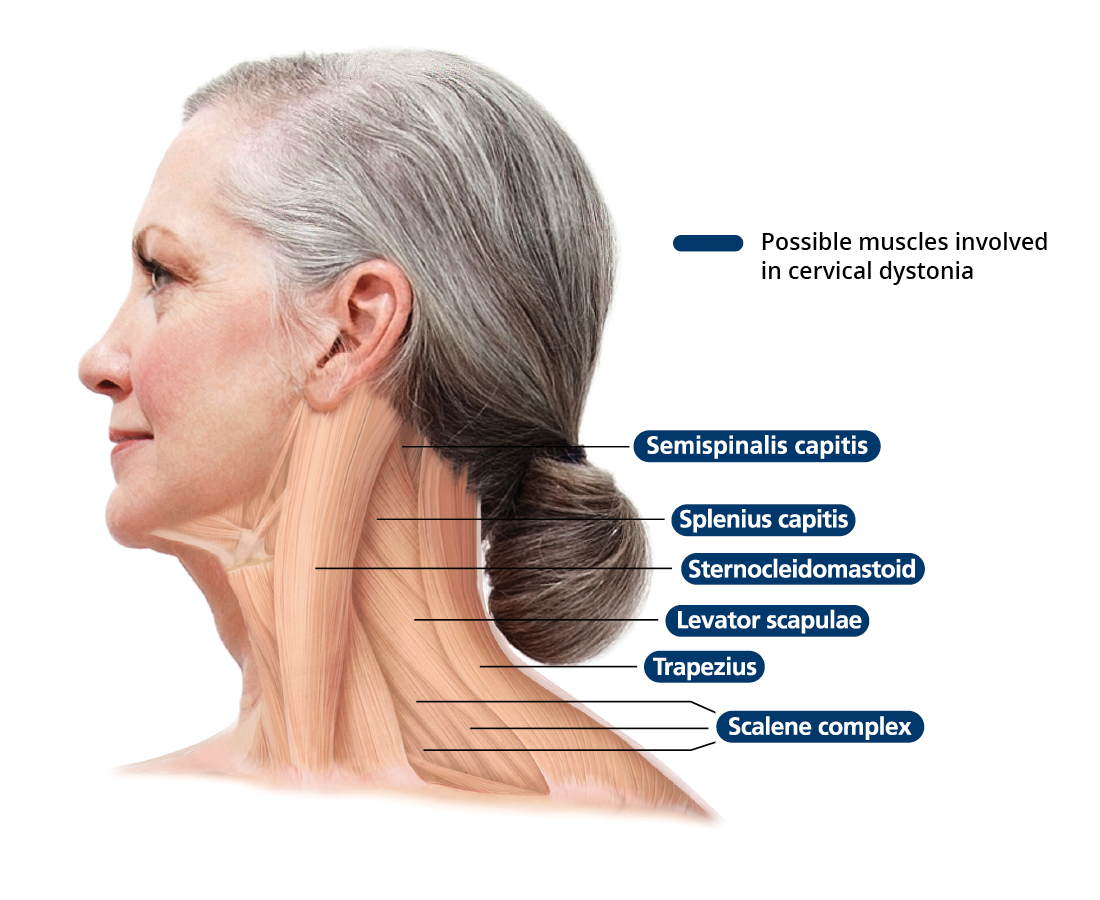
Your Parkinson's symptoms may include resting tremor, rigidity, slowed movements (bradykinesia), and freezing, along with others depending on your body. But the painful symptom you have most likely experienced in one or more of its forms, is dystonia.Dr. Suketu Khandhar reports, in the Summer 2018 issue of the PANC* newsletter, "Dystonia is a sustained muscle contraction causing abnormal postures and positions. It is more than simple muscle cramping."
Each person may experience these movements differently, in different parts of their bodies. But, dystonia is usually painful and can interfere with the activities of daily life.
There are several forms of Parkinson's dystonia:
Cervical Dystonia (previously called Spasmodic Torticollis) - Occurs in neck muscles and causes one's head to twist to one side, once PD medication has worn off.
Toe-Curling Dystonia - Usually occurs in the early hours before PD meds have started working.
Foot-Inversion Dystonia - Turns entire foot inward making it difficult, or impossible to walk.
Truncal Dystonia - Entire torso leans, or is pulled to one side.
Writer's Cramp - Hands or fingers curl, making it difficult to write.
Facial Dystonia - Includes jaw clenching or tooth grinding.
Blepharospasm - Excessive eyelid blinking or forced eyelid closure.
If you have one or more of these conditions and it is impacting your activities of daily life, see your neurologist. He will be able to confirm the diagnosis and start treatment to help alleviate some of your pain and discomfort. There are many things your neurologist can do for you, whether it be adding or increasing PD medications, prescribing muscle relaxants, Physical Therapy, or even an injection of Botulinum Toxin (Botox) to help relax muscle spasms. Note: You cannot always predict what your body is going to do at a given time, so Dr. Khandhar recommends you take a video of yourself while in a state of dystonia, so you can show the neurologist at your appointment time.
My husband has had all of these forms of dystonia at one time or another. And every one of these treatments has given him some relief. He does get a Botox shot around his eye to help open it up and it has been a huge help to him. The shot is painless and will last anywhere from 3 to 4 months. It helps him see better and alleviates cramping in his cheek and around his exterior eye.
Don't live with discomfort when you don't need to. If you aren't a fan of conventional medicine and prefer homeopathic methods, have your neurologist refer you to a PT who can equip you with exercises and/or specific movements to help the affected areas. Or, our Chiropractor (uses kinetic and PT methods) did wonders for Jamey's cervical dystonia. Other options might include acupuncture as well. But you will want to work with a neurologist at the outset, regardless.
Don't suffer in silence! Getting the relief you need may make you a happier person, and happy people live longer! Parkinson's or not, don't you want to live longer?!
.
*Parkinson Association of Northern California, 1750 Prairie City Road, Suite 130-220, Folsom, CA 95630.
Subscribe to:
Posts (Atom)